
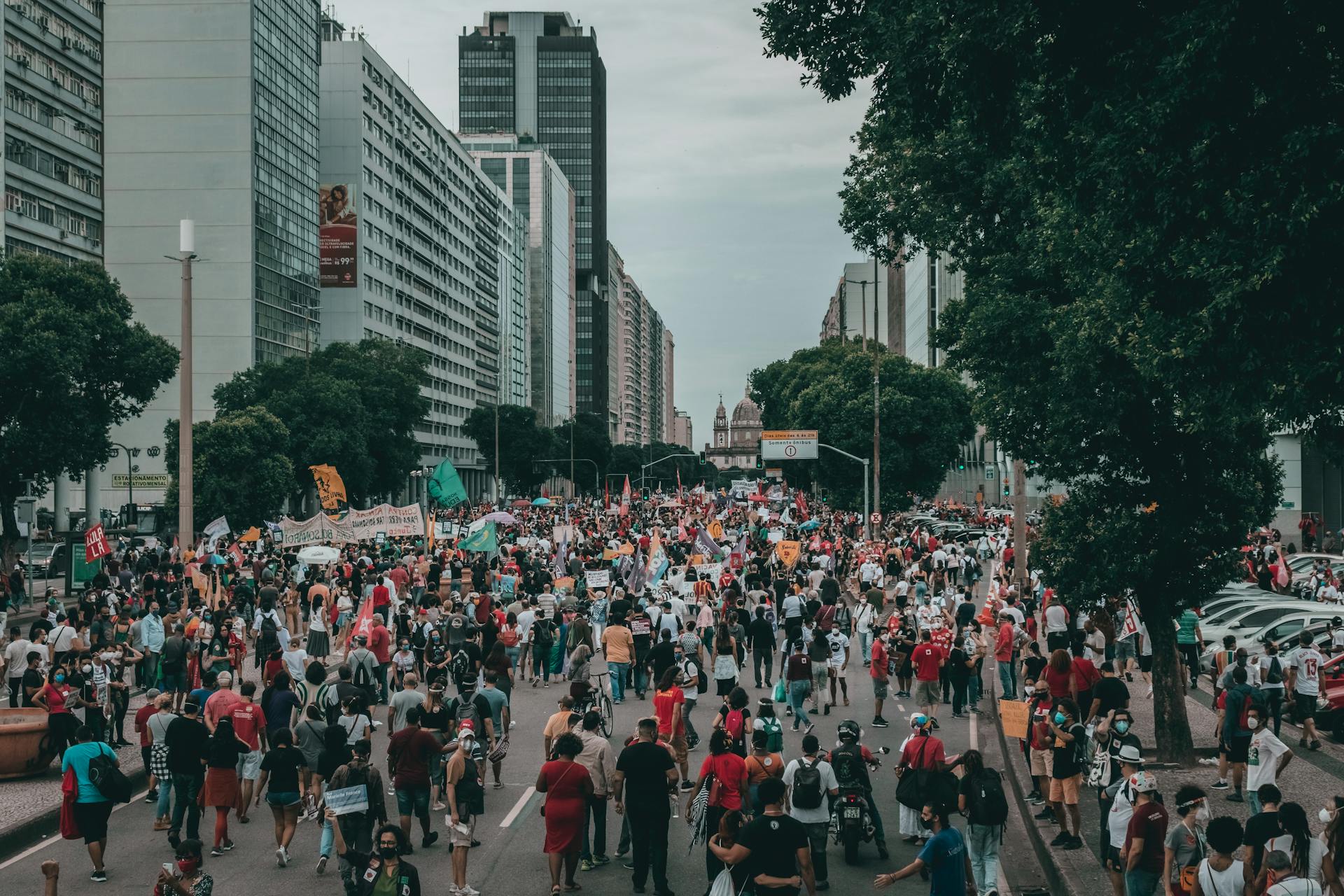
Trust is the invisible architecture upon which modern civilization is built. It is the lubricant that reduces friction in economic transactions, the glue that holds communities together, and the bedrock upon which democratic institutions stand. Yet, in the 21st century, this foundational element is undergoing a continued erosion. We are witnessing not only a fluctuation in public sentiment, but a structural disintegration of confidence in the very systems designed to govern, inform, and protect society. From the halls of government to the corridors of corporate power, from the editorial pages of media to the algorithms of social platforms, the covenant between authority and the populace is fraying. This crisis of trust is not a singular event but a converging storm of technological disruption, institutional issues, and psychological fragmentation.
With the deepening crisis of trust, it is necessary to understand the depth of this fracture, analyze its multifaceted causes, and propose a robust framework for reconstruction. Without a deliberate and systemic effort to restore faith, societies risk descending into a state of chronic instability where cooperation becomes impossible, truth becomes subjective, and the social contract dissolves into a zero-sum game of suspicion.
The anatomy of institutional distrust
The decline of trust in institutions is perhaps the most visible manifestation of this broader crisis. Governments, once viewed as the ultimate arbiters of public good, are increasingly perceived as distant, self-serving, or incompetent. In many democracies, voter turnout stagnates or declines, not out of apathy, but out of a profound belief that the political machinery no longer serves the citizenry. The perception that policy outcomes are dictated by lobbying interests rather than the public welfare has created a cynicism that is difficult to reverse. When citizens believe that the rules are rigged, the incentive to participate in the democratic process evaporates, leading to a vacuum filled by populism, extremism, and political polarization.
Similarly, the corporate sector faces a crisis of legitimacy. The promise that business growth equates to societal benefit has been shattered by repeated scandals, environmental negligence, and the widening wealth gap. The modern corporations is often viewed not as a community partner but as an extractive entity, prioritizing shareholder value above all else. This skepticism is compounded by the realization that large multinational corporations possess more influence over national policy than many sovereign states. When the entities responsible for economic stability are seen as the architects of inequality, the resulting distrust fuels social unrest and regulatory backlash.
The media landscape, traditionally the fourth estate tasked with holding power to account, has also suffered a devastating blow to its credibility. The fragmentation of the information ecosystem has led to a proliferation of niche outlets and the rise of algorithmic echo chambers. Media organizations are frequently accused of bias, while new digital platforms prioritize engagement over accuracy, often amplifying sensationalism and misinformation. The result is a “truth decay” where citizens no longer agree on a shared set of facts. When there is no consensus on reality, the ability of institutions to communicate effectively or implement policy is severely compromised. The media is no longer a bridge between the governed and the governors but often a battleground where competing narratives fight for dominance, further deepening the divide.
The technological accelerant: Algorithms, echo chambers, and epistemic chaos
Technology, particularly the social media, has acted as a powerful accelerant to the crisis of trust. While the digital revolution promised democratization and connectivity, it has inadvertently fostered an environment where misinformation spreads faster than truth. The algorithmic curation of content, designed to maximize user engagement, often prioritizes emotionally charged, divisive, and conspiratorial content. This creates feedback loops where individuals are constantly reinforced in their existing beliefs, insulating them from opposing viewpoints and fostering a sense of epistemic isolation.
The phenomenon of “echo chambers” and “filter bubbles” has fundamentally altered the way societies process information. In these digital silos, dissenting voices are silenced or mocked, and extreme views are normalized. This leads to a radicalization of discourse, where compromise is viewed as weakness and nuance is dismissed as deception. The speed at which false information travels allows it to take root and shape public opinion before fact-checkers can intervene. By the time the truth emerges, the damage is often done, and the narrative has already solidified.
Furthermore, the rise of artificial intelligence and deepfake technology introduces a new layer of uncertainty. The ability to generate hyper-realistic but entirely fabricated images, videos, and audio clips undermines the evidentiary basis of trust. When “seeing is believing” is no longer a reliable heuristic, society enters a post-truth era where nothing can be taken at face value. This technological capability creates a pervasive sense of paranoia, where every piece of information is suspect, and every authority figure is potentially a purveyor of manipulation.
The sheer volume of information available also contributes to cognitive overload, making it difficult for individuals to discern credible sources from noise, leading to a retreat into tribalism where trust is granted only to those who share one’s identity or ideology.
Cognitive biases and the loss of shared reality
Beyond the structural and technological factors, the crisis of trust is deeply rooted in human psychology. Cognitive biases play a significant role in how individuals perceive and interpret information. Confirmation bias, the tendency to search for, interpret, and recall information in a way that confirms one’s preexisting beliefs, makes it nearly impossible for people to change their minds in the face of contradictory evidence. This psychological mechanism reinforces the echo chambers created by technology, creating a self-perpetuating cycle of distrust.
The loss of a shared reality is perhaps the most dangerous psychological consequence of this crisis. In a healthy society, there is a baseline agreement on fundamental facts and values that allows for constructive dialogue and collective action. However, as trust erodes, this shared reality fragments. Different groups begin to inhabit entirely different informational universes, each with its own version of history, science, and current events. When two parties cannot agree on the basic premises of a discussion, negotiation and compromise become impossible. This fragmentation leads to a state of social paralysis, where collective problems such as climate change, pandemics, or economic inequality cannot be addressed because there is no consensus on the nature of the problem or the validity of the proposed solutions.
Moreover, the psychological impact of chronic distrust is profound. Living in an environment of constant suspicion and uncertainty generates high levels of stress and anxiety. It erodes social capital, the networks of relationships that enable societies to function effectively. When people do not trust their neighbors, local leaders, or national institutions, they withdraw from civic life, leading to a decline in community cohesion and resilience. This withdrawal creates a vicious cycle: as fewer people participate, the remaining institutions become less representative and less effective, further fueling distrust.
Geopolitical instability
The crisis of trust is not confined to domestic borders; it is a global phenomenon with significant geopolitical implications. The post-Cold War era was characterized by a degree of optimism regarding international cooperation and the spread of liberal democracy. However, the current landscape is marked by a resurgence of nationalism, great power competition, and a retreat from multilateralism. International institutions such as the United Nations, the World Health Organization, and the World Trade Organization are increasingly viewed with skepticism, seen as ineffective or biased by various member states.
Geopolitical rivalries have intensified, with major powers engaging in information warfare and cyber operations designed to undermine the trust of adversaries in their own institutions. The weaponization of information has become a standard tool of statecraft, used to destabilize foreign governments, manipulate elections, and sow discord within societies. This global dimension of the trust crisis exacerbates domestic tensions, as external actors exploit internal divisions to achieve strategic objectives.
Furthermore, the inability of the international community to effectively address global challenges such as climate change, nuclear proliferation, and poverty has further eroded trust in the global order. When countries fail to honor international agreements or prioritize short-term national interests over long-term global stability, the credibility of the international system is damaged. This lack of trust hinders the coordination necessary to solve problems that transcend borders, creating a “tragedy of the commons” on a global scale. The result is a world that is more fragmented, more volatile, and less capable of collective action.
Rebuilding trust requires a comprehensive approach
Addressing the crisis of trust requires a comprehensive approach that addresses the root causes at the individual, institutional, and societal levels. There is no silver bullet; restoring trust is a slow, difficult, and continuous process that demands sustained commitment from all sectors of society.
Institutional reform and transparency
The first step in rebuilding trust is for institutions to fundamentally reform their operations to prioritize transparency, accountability, and responsiveness. Governments must move beyond performative transparency and embrace more openness. This includes making data accessible, explaining decision-making processes in plain language, and actively seeking public input on policy matters. Institutions must demonstrate that they are listening and acting on the concerns of the citizenry.
Corporations must adopt a stakeholder model that goes beyond shareholder primacy. This involves integrating environmental, social, and governance (ESG) criteria into core business strategies and being transparent about supply chains, labor practices, and environmental impact. Companies must be held accountable for their actions through robust regulatory frameworks and independent oversight. When institutions admit mistakes and take corrective action, it can actually enhance trust rather than diminish it. Perfection is not the goal; integrity and accountability are.
Media literacy and information hygiene
Rebuilding trust in the information ecosystem requires a concerted effort to improve media literacy and promote information hygiene. Education systems must integrate critical thinking and digital literacy into their curricula, teaching students how to evaluate sources, identify bias, and recognize misinformation. This should be a lifelong learning endeavor, supported by public campaigns and community programs.
Social media platforms must take greater responsibility for the content they host. This includes refining algorithms to prioritize accuracy and diversity of viewpoint over engagement, investing in robust fact-checking mechanisms, and being transparent about content moderation policies. Platforms should also empower users with better tools to control their information diets and understand how their data is being used. Collaboration between tech companies, journalists, academics, and civil society is essential to develop standards and best practices for the digital age.
Strengthening civil society and community bonds
Civil society organizations, local communities, and grassroots movements play a crucial role in rebuilding trust. These entities often operate at a level where people can see the direct impact of their actions and build personal relationships based on shared experiences. Supporting and funding local organizations can help restore the social fabric that has been torn apart by polarization.
Community-building initiatives that bring people from diverse backgrounds together can help break down barriers and foster empathy. Dialogue facilitation, digital and offline town halls, and collaborative problem-solving projects can create spaces for constructive engagement where differences are acknowledged but do not prevent cooperation. Focusing on shared goals and common values is a pathway allowing communities to rebuild the social capital necessary for a functioning society.
Ethical leadership and role modeling
Leaders at all levels must model the behavior they wish to see. This means demonstrating humility, admitting uncertainty, and engaging in respectful dialogue even with those they disagree with. Leaders must resist the temptation to exploit divisions for political gain and instead work to bridge gaps and find common ground.
Ethical leadership also involves holding oneself and others accountable. When leaders violate trust, there must be consequences. A culture of impunity erodes trust, while a culture of accountability reinforces it. Leaders must be willing to listen to criticism and adapt their strategies based on feedback. Leaders can inspire confidence and encourage others to follow suit by embodying the values of integrity, transparency, and respect.
Technological governance and regulation
As technology continues to evolve, it is essential to establish robust governance frameworks that ensure it serves the public interest. This includes regulating the use of algorithms, protecting privacy, and preventing the misuse of AI for malicious purposes. Governments must work with the private sector and civil society to develop ethical guidelines and standards for emerging technologies.
Regulation should be agile and adaptive, capable of keeping pace with rapid technological change while providing clear expectations for developers and users. International cooperation is also necessary to address the global nature of digital threats. Here, the international community, trough establishing norms and treaties that govern cyberspace, can reduce the risk of conflict and build trust in the digital realm.
The necessity of collective action
The crisis of trust is one of the defining challenges of our time. It threatens the stability of countries, the effectiveness of economies, and the cohesion of communities. However, it is not an insurmountable obstacle. History has shown that societies can recover from periods of deep distrust and emerge stronger. The path forward requires a collective commitment to cooperation, truth, transparency, and accountability. It demands that we move beyond cynicism and engage in the hard work of rebuilding the foundations of our social contract.
Restoring trust is not the responsibility of any single institution or individual; it is a shared obligation. Governments, corporations, media organizations, educators, and citizens must all play a part. It is possible to create a future where trust is not a scarce commodity but a renewable resource, but this requires all parties to work together. The stakes are too high to do otherwise. The survival of institutions, the prosperity of economies, and the well-being of communities depend on our ability to heal the fractures in our society and forge a new path based on mutual respect and shared purpose. The journey will be long and arduous, but the destination, a society grounded in trust, is worth every effort.
Dawid Wiktor is the Chief Executive Officer of Media Scope Group. Visit his Exec Profile to read more of his writings.